Free Consultation
(888) 888-8888

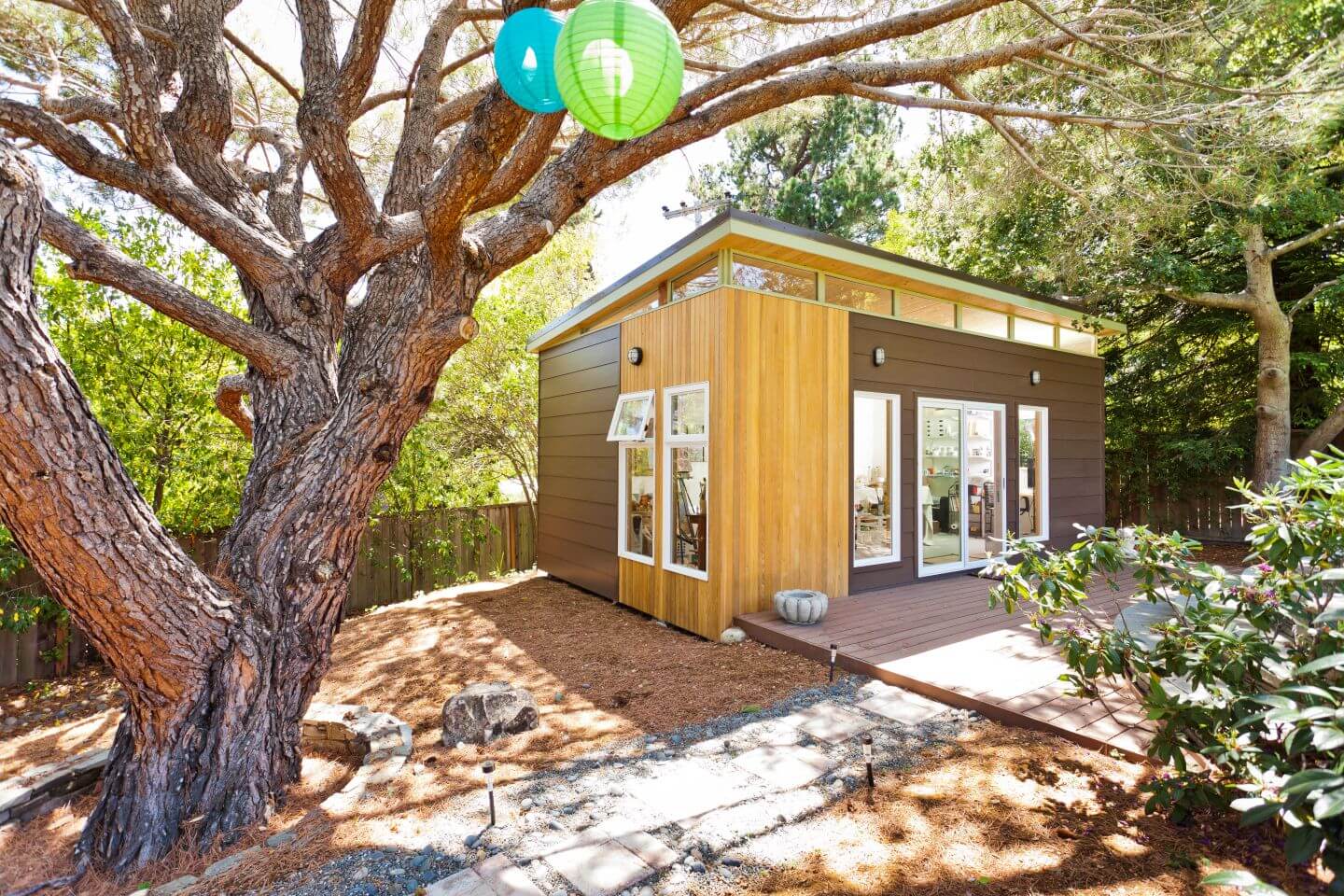
Accessory dwelling units and backyard offices are changing how people in Washington use their property. A small, well designed structure can add living space, a quiet office, or a guest suite without a full home addition.
At the same time, permits, zoning rules, and building codes can feel confusing. Washington has passed several laws to support ADUs, but each city and county still applies its own processes and details.
This guide explains how permits work for ADUs and backyard office sheds in Washington, what to expect in a few major cities, and how Modern Shed helps homeowners move through the process with less stress.
Modern Shed is based in Seattle and has many years of experience designing and delivering prefab backyard studios and ADUs for Washington homeowners.
In Washington, an accessory dwelling unit, or ADU, is a second, smaller home on the same lot as a primary house. It has permanent provisions for living, sleeping, cooking, and sanitation. Cities recognize two main types:
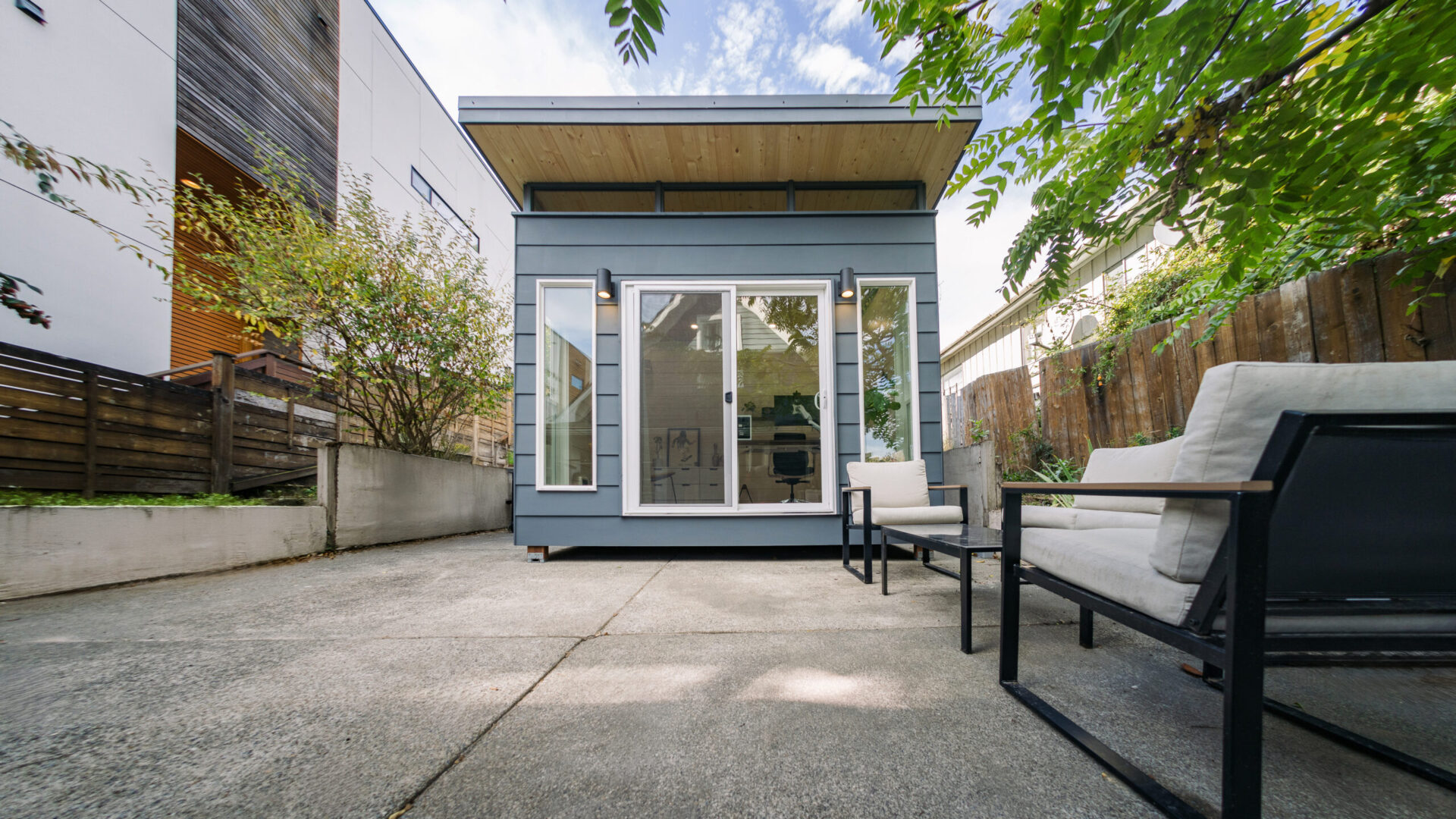
A backyard office shed from Modern Shed is different from an ADU unless you design and permit it as a dwelling. A typical home office shed:
This difference matters because ADUs follow housing rules while non-habitable sheds often follow simpler accessory structure rules. You should always confirm with your local building department how a planned structure is classified.
Washington has taken steps to make ADUs easier to build, especially in cities that plan under the Growth Management Act.
In the past, many cities required the property owner to live on the lot when there was an ADU. State law now limits those rules. Under ESSB 5235, local governments that plan under the Growth Management Act may not require owner occupancy in most ADU situations, with narrow exceptions for owners that hold several ADU properties.
This change makes it simpler to build and rent ADUs, and reduces a common barrier for homeowners.
More recent legislation, including HB 1337, pushes cities and counties to remove barriers such as excessive parking requirements, strict design mandates that go beyond those for main houses, and very low size caps.
Key statewide themes include:
The exact text of these laws continues to evolve. For current details, you can review state summaries from the Municipal Research and Services Center and recent bill reports.
Modern Shed tracks these changes because many of its projects in Washington are detached studios and ADUs that must fit both state direction and local rules.
Every city and county applies the building code a little differently, but there are some common patterns.
Many Washington jurisdictions follow a version of the International Residential Code that treats very small, non-habitable accessory structures differently. In practice, it is common for one-story detached accessory structures with floor areas of 200 square feet or less, used for storage or similar non-habitable purposes, to be exempt from a building permit.
Examples include:
Other cities, including Tacoma, Yakima, and Stanwood, follow similar size thresholds for sheds in their local permit guides.
These examples show a pattern, but they are not universal rules. Each building department sets its own thresholds and can change them over time. Also, a shed that is exempt from a building permit still must meet zoning rules such as setbacks and height limits.
You should expect to need a building permit if:
Cities such as Tacoma state that construction permits are required for creating, converting, or legalizing an ADU. Many other cities follow the same approach.
Modern Shed works with homeowners and local contractors to align design and scope with the right permit path. That may mean treating a small backyard office as a non-habitable accessory structure or designing a full ADU when you need a legal dwelling unit.
Washington law sets the frame, but your city controls the details. Here is a high-level look at a few major cities. These summaries do not replace local code and are not a substitute for a direct review of current city rules.
Seattle actively promotes ADUs and detached backyard cottages. The city defines attached ADUs within the main house and detached ADUs in separate backyard structures.
Seattle has published guides and tools such as ADUniverse, which offers pre-approved backyard cottage designs and planning resources for homeowners. These resources are meant to make it easier to understand siting, height, and design standards.
Modern Shed has deep roots in the Seattle area and has built many studios and offices that fit within these local rules and the city’s focus on well designed backyard spaces.
Tacoma views ADUs as an important part of its housing strategy. City tip sheets describe ADUs as second, smaller dwelling units on the same lot as a primary home, and note that they can be attached or detached.
Tacoma has taken steps to ease ADU regulations and allow them in more residential areas. The city has adopted guides that explain standards, permit steps, and practical considerations for homeowners.
Bellevue has updated its ADU rules to expand size limits and remove some earlier restrictions. City information notes that owner-occupancy requirements were removed and that ADUs can now reach larger maximum sizes relative to the primary structure.
These changes reflect a wider trend across Washington to allow more flexible housing options.
For each of these cities, a backyard office that does not function as a dwelling may follow a different permit path than a full ADU. Early planning with your local building department, your designer, and your builder is important.
Every property is different, but most Washington projects follow a similar arc.
Decide how you will use the structure:
If you need a legal dwelling with a kitchen, sleeping area, and bathroom, you are likely in ADU territory. If you only need a workspace without full residential features, a backyard office shed may be enough.
Your city or county website will have a zoning map and basic development standards. Look for:
If you are unsure, you can contact the planning or permitting office and describe your idea. Many departments offer pre-application help.
Ask your building department:
Use examples such as the 200 square foot thresholds in Jefferson County and King County as a guide, but always verify your own jurisdiction.
Modern Shed works with homeowners to choose a model and layout that fits the site. A site plan typically shows:
For ADUs, you may also need floor plans, elevations, and utility information.
Your contractor or design team can help prepare and submit the building permit application. For ADUs, this usually includes:
For small backyard offices treated as accessory structures, the submittal set may be lighter, but you should still expect some level of review.
Once the structure is built, the city or county will perform inspections based on the scope of the work. After passing final inspection, you receive approval to use the space.
Modern Shed and its installer network coordinate build steps with local officials so that inspections and approvals proceed smoothly.
Here are a few questions Washington homeowners ask often.
You will likely need a building permit if your backyard office is larger than your local exemption size, has plumbing, or is used as habitable space. Many jurisdictions exempt very small, non-habitable sheds of about 200 square feet or less from building permits, but they still must comply with zoning rules.
Because rules vary by city and change over time, the safest step is to ask your local building department about your specific plan.
A shed or backyard office is usually a non-habitable accessory structure used for storage, work, or hobbies. An ADU is a self-contained dwelling with features for sleeping, cooking, and sanitation on the same lot as a primary home.
If you want to rent the space or use it as a separate living unit, you should plan and permit it as an ADU.
Some cities allow ADUs and studios to be used as short-term rentals, while others place limits or separate license rules on that use. Local ordinances may also treat owner-occupancy differently when an ADU is used as a short-term rental.
Always review your city’s current rules on short-term rentals before planning this use.
Timeframes vary. Some small accessory structures move through review in a matter of weeks. ADUs in larger cities can take longer due to plan review, corrections, and scheduling. City guides in places like Seattle and Tacoma note that permit and construction planning can take several months from start to finish.
Modern Shed helps you budget realistic timelines based on your location and scope.
Modern Shed provides prefabricated studios and ADUs along with design support and a network of installers who are familiar with Washington permitting and inspection processes.
The company can coordinate with your local contractor, your architect when needed, and your building department so your project aligns with current rules.
Modern Shed has its roots in the Pacific Northwest and has completed many projects for Washington homeowners looking for office sheds, studios, and ADUs that function in a rainy, coastal climate.
Key advantages include:
Planning an ADU or backyard office in Washington does not have to be overwhelming. When you understand how state rules and local codes work together, it becomes easier to see what is possible on your property.
Modern Shed can help you:
If you are ready to explore options for your Washington property, visit Modern Shed and request a consultation. A short conversation can help you see what is realistic on your lot, what the permit path may look like, and how a well designed studio or ADU can improve daily life.
This guide is meant to help you understand the general rules and patterns that apply to ADUs and backyard offices in Washington. Each city and county has its own regulations and processes. Once you contact Modern Shed, our team will work with you to identify the specific requirements for your property so you can make decisions with confidence.